


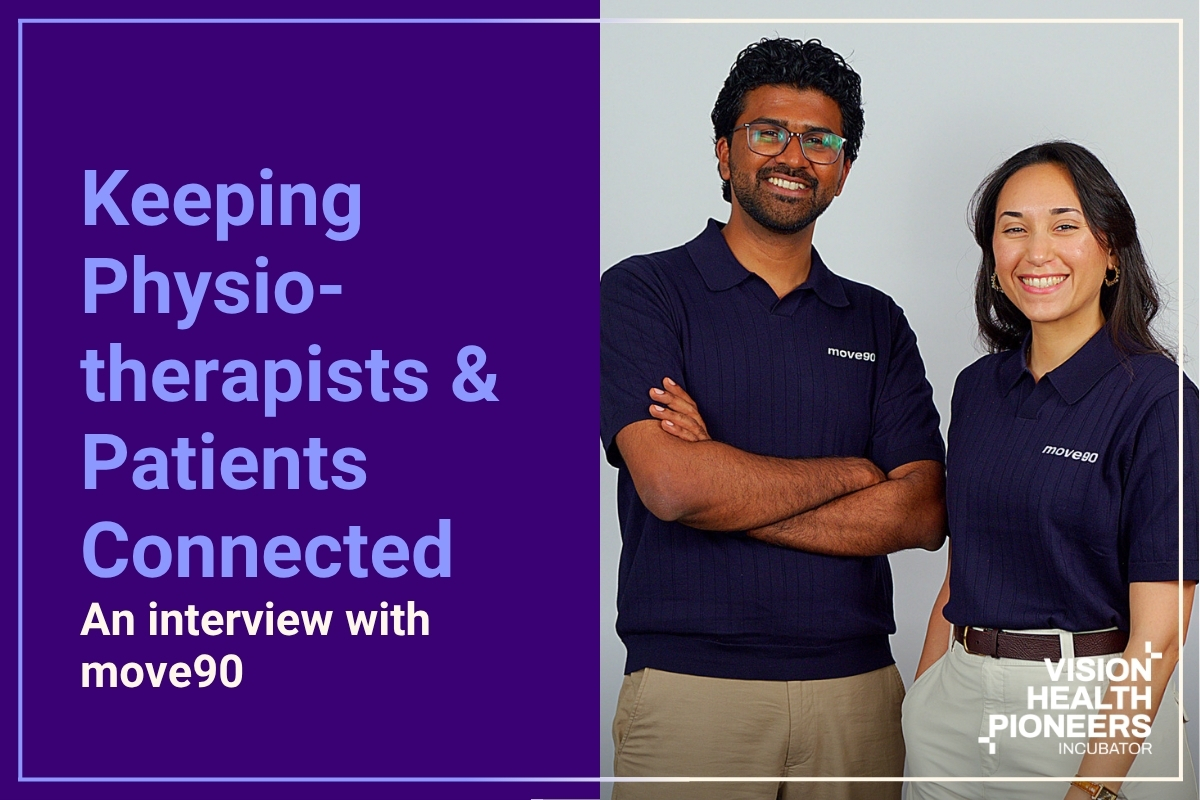
14 Jul Meet move90: THE “PHYSIOTHERAPY” REHAB COMPANION THAT FOLLOWS YOU HOME
As part of Vision Health Pioneers Cohort 8, they’re now onboarding their first physiotherapist partners for a pilot and working towards closing the loop between clinic and home for good. In this interview, Selma and Uvaise share how the problem found them, what they had to unlearn along the way, and what they’re hoping to build next.
The problem rather found us than we found the problem. It started with our own experiences. Ten years ago, I [Uvaise] had a swimming injury and came back from physiotherapy with little to no material. I ended up not doing his exercises well and five years later, surgery was on the table. Meanwhile, on a different continent, Selma was going through the same thing. When we started interviewing physiotherapists across the world, we saw that this gap exists everywhere. Around three quarters of patients don’t follow through with their exercises or don’t do them well. It was only when we started looking at the research that we found the number of 50 to 70%, which matched exactly what we had been hearing. Physiotherapy doesn’t fail in the clinic. It fails between the sessions. That’s exactly what we’re building for.
When we started building move90, we came at it from the angle of automating the tedious tasks physiotherapists deal with every day – selecting exercises, creating a plan, printing it, handing it over. But when we started speaking to actual physiotherapists, one of them put it in a way that changed everything for us: the plan is the clinical judgment. Since we never intended to replace the physiotherapist, we had to adjust. We flipped the approach and gave more control back to the therapist. The AI suggests exercises, but the physiotherapist has the final say: they can swap, delete or add whatever they see fit the patient’s context and condition. What we’re offering is something new: an assistant before, during and after the session. It’s also a good summary of what building a startup actually looks like – investigating a hypothesis, confirming it, adjusting and going again.
This is something that keeps us awake at night. More than 70% of physiotherapy treatments have a significant home recovery element and the key to recovery is doing the exercises at home…and doing them properly. What we noticed is that existing solutions tend to come from one side only: either the physiotherapist or the patient. But the real black box of recovery is what happens at home, between visits. We came to believe that it can only be solved by closing the loop from both sides at once. That’s what we’re working towards.
In a world where AI helps us build faster than ever, the technical side of the product isn’t actually where the real challenge sits. What we discovered early on is that payers need evidence before they’ll pay for a solution, but you need real deployment to generate that evidence and validate the product in the first place. It’s a classic chicken and egg problem. The way we’re breaking that cycle is by going directly into physiotherapist clinics, having real conversations with therapists and getting them on board for a pilot. That’s where we are right now: onboarding our first physiotherapist partners for a pilot.
Given everything we just described, the most important thing for us right now is market access. Two months into the program, what we’re already appreciating most is the acceleration that comes with being part of it: getting closer to insurers, building the evidence base, understanding medical regulations and finding our way through a genuinely complex healthcare system. That’s where Vision Health Pioneers Incubator can help us most, and that’s what we’re looking forward to.
Selma and Uvaise are only a few months in, but their conviction is clear: recovery has to work at home, not just in the clinic. We’re excited to see where this journey takes them and how move90 will change the way physiotherapy works in practice.
Follow their journey here: https://www.move90.com/