



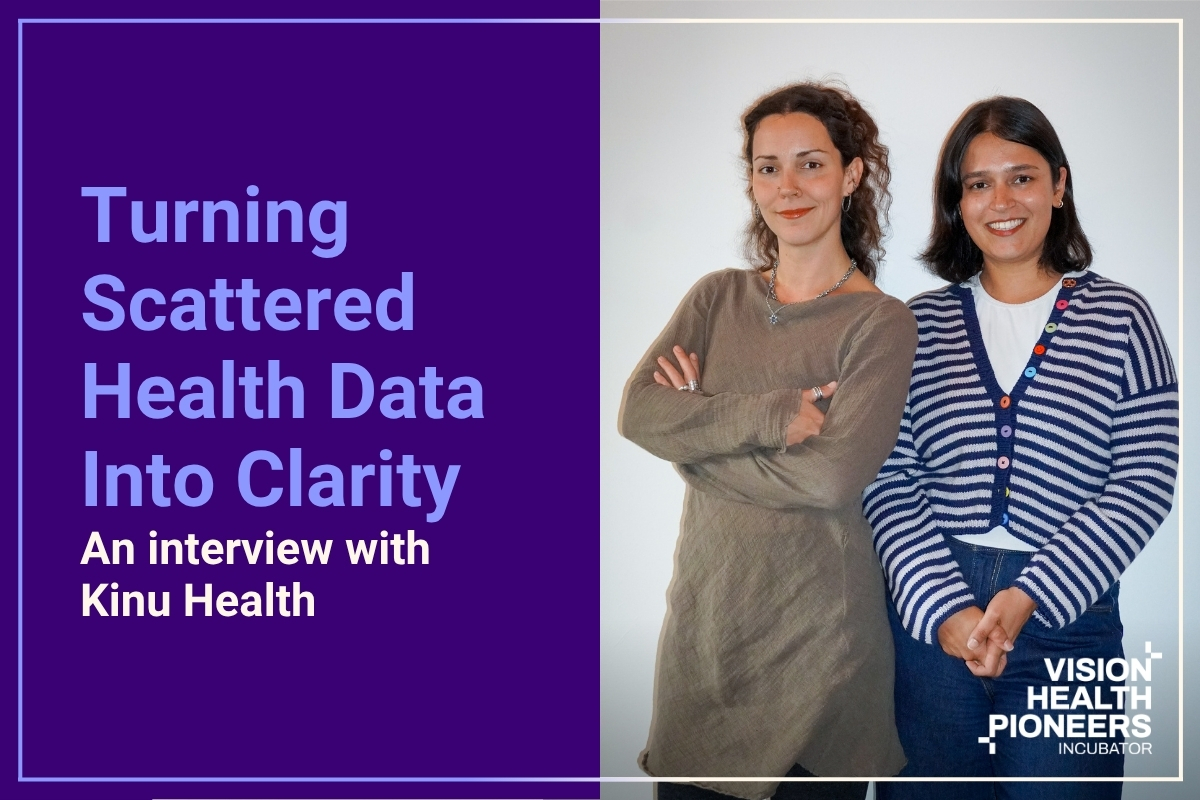
13 Aug Meet Kinu Health: Making Invisible Illness Visible
Kinu Health began with a frustrating truth: when you live with an autoimmune condition, you’re often the only person who sees the whole picture, yet you’re handed the fewest tools to make sense of it. Ayesha created Kinu Health out of her own diagnosis journey and Ioanna joined because she believes in it just as deeply. Together they’re building a companion that helps patients track their symptoms, understand their labs and walk into appointments prepared instead of overwhelmed. This is their story.
Kinu Health started with my own (Ayesha) diagnosis. When I was told I had Hashimoto’s, hypothyroidism and insulin resistance, I expected relief at finally having answers. Instead I felt overwhelmed. There was too much new information, too many numbers and nothing tying it together. I’d walk into appointments with my symptoms in my head and walk out realizing I’d forgotten half of them, either from nerves or because I couldn’t keep track on my own. On paper my results looked “better”. But I didn’t feel better and I had no way to show anyone the fuller picture of what living in my body actually felt like. I went looking for something to help me hold it together: a way to track symptoms, see my labs over time and feel prepared instead of panicked. It didn’t exist. So I set out to build it. Kinu Health didn’t come from a business plan; it came from a very personal need to feel less lost in my own health.
Because the system was never built around the person living with the illness. It’s built around appointments, specialists and results, each one a snapshot. But an autoimmune condition isn’t a snapshot. It’s daily and the only person present for all of it is the patient. So the patient is the one constant thread through their whole health journey, yet they’re given the fewest tools to hold it. Most solutions are built for clinicians or institutions or they chase the exciting problem of diagnosis and skip the quieter, harder work of helping a person track their own body and feel understood. The people who feel this gap most, patients with chronic, invisible illnesses, are rarely the ones building the tools. It costs the EU an estimated €57.2 billion a year and it’s gone unsolved this long partly because it isn’t glamorous. It’s slow, human work. But that’s the part that matters most to the people living it.
Two connected reasons. The first is responsibility. The moment a tool interprets your results or suggests a diagnosis, it becomes a regulated medical device, with all the weight and risk that carries. We never wanted Kinu Health to be a black box telling people what’s wrong with them. That’s the doctor’s role and we take that boundary seriously. We also work with medical advisors who help us keep everything grounded and firmly within clinical boundaries. The second is that clarity is what patients need first. Before anyone can make a decision about their health, they have to understand what’s in front of them: their labs and symptoms laid out clearly, over time, instead of as a pile of PDFs and half remembered numbers. That alone is powerful. It turns “I think I’ve been more tired lately” into something you can see and show someone. So starting with visual clarity and digitising lab reports wasn’t the small version of the ambitious idea. It was the foundation. Help people understand their own health clearly and calmly, earn that trust and everything else builds on top.
That focus is deliberate, not the ceiling. Our long term vision is to grow further into the medical space alongside healthcare professionals and we’re already working with doctors to keep our content medically grounded. As Kinu Health grows, we plan to add more clinically supported features. For now, we’re intentionally focused on building a trusted wellness platform within the scope of what we can responsibly deliver.
It started with listening. Before we built much of anything, we interviewed patients and specialists: patients, to find the real everyday frustrations and specialists, to see the gaps from the other side of the desk. That told us which problems were actually worth solving. Lived experience is built into the team, too. Ioanna and I both live with autoimmune conditions and bring our own experience of it, so none of this is abstract for us. One moment stuck with us from the beta testing: a patient told us how much it would mean to walk into an appointment with a complete, objective record of everything she’d tracked and finally have her concerns properly addressed. That’s exactly what we’re building. We’re now in our first closed beta testing with real people using Kinu Health and their feedback goes straight back into the product.
All of it. We’re here to be pushed. But three things matter most: regulation, validation and funding. On regulation, we want to set ourselves up properly for what’s next. We’ve deliberately kept Kinu Health on the right side of the medical device line, but the path ahead is complex and we’d rather have expert eyes on it early than learn the hard way. On the product, we’re in our first beta and we want to come out with something genuinely validated, not just working technically, but with proven demand that real patients rely on. Challenge us hard on that: the evidence, whether people truly want it, where it falls short. On funding, we want to leave the incubator set up to keep going, with the support secured to take Kinu Health well beyond these first steps. So wherever we’re too cautious, not cautious enough or too close to see clearly, that’s where we want the pressure. We didn’t build Kinu Health to protect an idea. We built it to help people, and being pushed is how it gets good enough to do that.
What stands out about Ayesha and Ioanna isn’t just what they’re building – it’s why. They’re not solving an abstract problem. They’re building the tool they both wished had existed when they needed it most. That personal stake shows in every decision they make, from the boundaries they set to the patients they listen to. We’re genuinely excited to have them in Cohort 8 and can’t wait to see where Kinu Health goes from here.
Follow their journey here: https://www.kinuhealth.com/